BarangayOS
The operating system for barangays
- Year
- 2026
- Role
- CTO & Co-Founder
- Category
- civic
- Status
- live
- Barangays live
- 2
- Surfaces from one monorepo
- 4
- Cost to onboard
- ₱0
Balud, Samar · Banilad, Negros Oriental
Portal, admin, mobile, kiosk
Built with
- Next.js
- React Native
- Expo
- Convex
- Better Auth
- Xendit
- TypeScript
- Tailwind CSS
- Turborepo
- Bun
There are roughly 42,000 barangays in the Philippines. A barangay is the smallest unit of government here, the one that issues the certificate you need before you can open a bank account, apply for a job, claim a benefit or register a business. Getting one has historically meant going to the hall in person, during office hours, and often going back a second time because the captain was out or the form was wrong.
BarangayOS removes the trip.
What it does
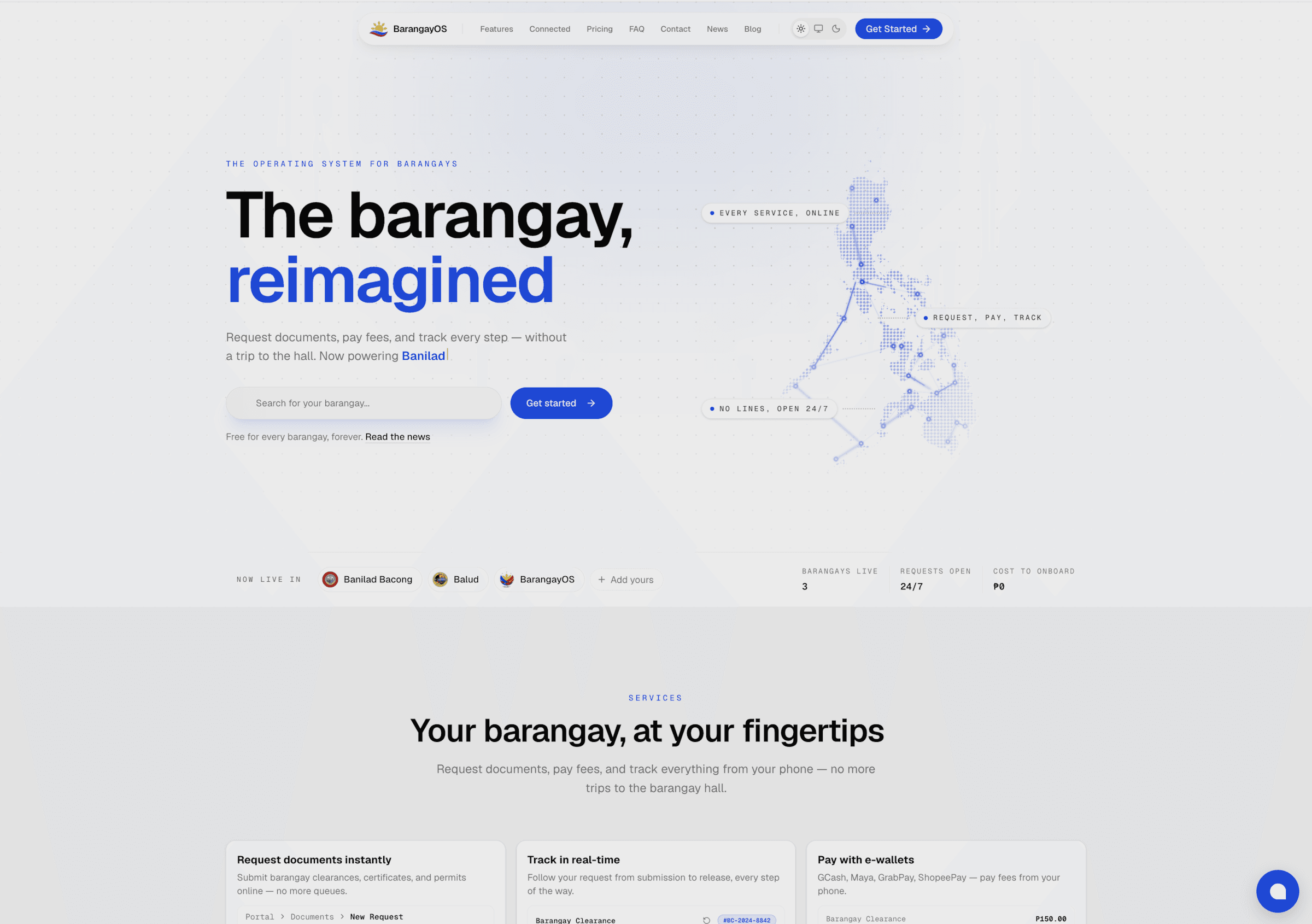
A resident opens the portal, verifies who they are once, and requests a document. They pay the fee with GCash or Maya. They watch the request move through review and approval in real time, and collect, or download, a document carrying a QR code that anyone can scan to confirm it is genuine.
On the other side of the counter, staff work a single dashboard: the resident register, incoming requests, finance, and announcements that reach the whole barangay in one post.
Four surfaces, one system
The hard part of civic software is not any single screen, it is that the same records have to be correct in four different places at once.
- Resident portal, Next.js. Request, pay, track, download.
- Staff dashboard, the back office: records, approvals, finance, KYC review.
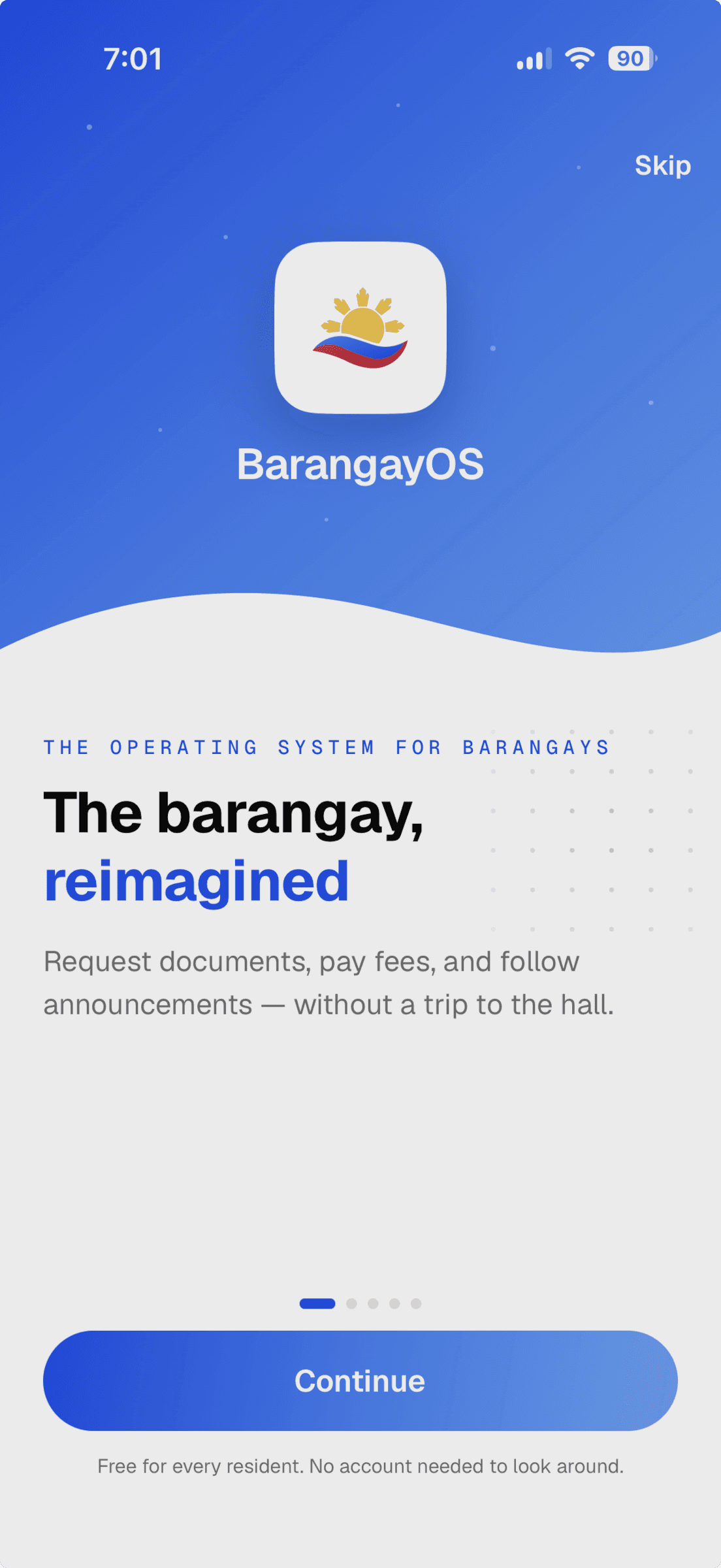
- Mobile app, React Native and Expo, so officials can work from the field rather than from the hall.
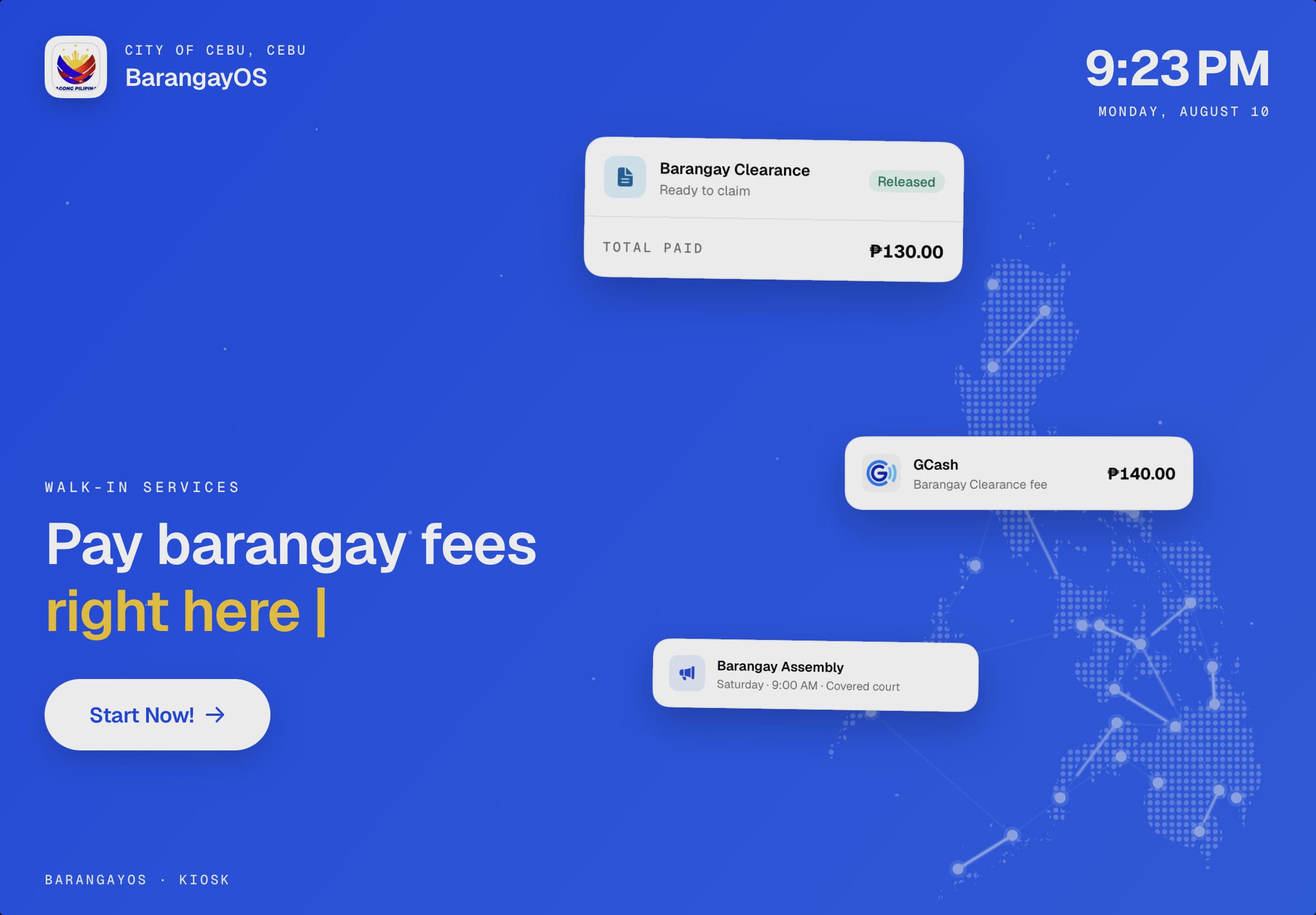
- Walk-up kiosk, an iPad build for residents who would rather not do this on a phone, standing in the hall itself. Not every resident is online, and a system that assumes they are is a system that excludes them.
All four come out of one Turborepo monorepo over a single Convex backend, which is what keeps a document's state identical whether you look at it from a kiosk or a phone. Authentication is Better Auth, sessions, organizations, and phone or email OTP, because a resident verifying their identity may not have an email address. Payments run through Xendit.
Built for the actual rules
It is compliant with the Data Privacy Act of 2012 (RA 10173), encrypts data at rest and in transit, and enforces role-based access, a barangay secretary and a treasurer do not see the same things.
Every issued document is QR-verifiable. Falsified barangay certificates are a real problem; a certificate that can be checked against the issuing system in two seconds is a different object from a piece of paper with a signature on it.
Free, in writing
BarangayOS costs a barangay nothing to onboard and nothing to run. No subscription, no trial that expires, no per-seat pricing.
That is a deliberate commercial choice rather than a charitable one. Barangay budgets are small and slow, and a procurement process is a wall that most civic software never gets over. Removing the price removes the wall.
Live
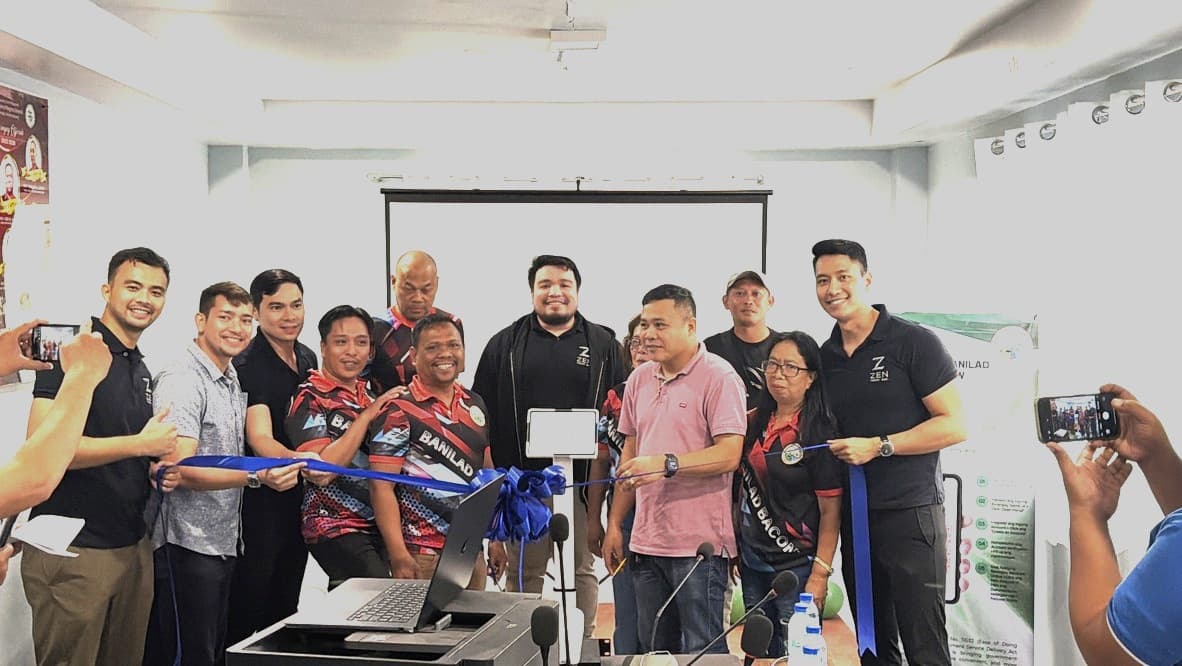
It went live in Barangay Balud, Basey, Samar, and in Barangay Banilad, Bacong, Negros Oriental, the ribbon-cutting above.
The product